go be it

‘The chains of  habit are too light to be felt until they are too heavy to be broken’ – Warren Buffett

Music:  Click here to listen to one of my favorite all around bands…Dawes.  They’re from California, and have been described as having a Laurel Canyon sound.  The singer/guitar player has an awesome 1960’s telecaster…for all you guitar buffs out there.  His brother plays drums in the band…and they have a special harmony when they sing together.  Griffin, the drummer, takes hipster to a whole new level.  I secretly want to be this guy for a week.  Enjoy!   

Image result for griffin dawes

What inspires you?  What get’s your juices flowing?  Is it sports, politics, family, education, music?  We all have certain experiences when we feel engaged and intrigued.  And we are all so different as to what flicks that switch for us.  


More and more, I’ve been trying to live closer to those things that are inspirational for me.  I wonder if all of us do this enough.  I know for me, for a long time…I didn’t.  Whether out of fear, insecurities, self-doubt, or many other reasons, we often don’t try new things or pursue avenues we are unsure of.  And that is surely something to regret.  I remember reading something a while back (can’t remember the source) in which older people that were near the end of their lives…basically gave advice on how to live.  Most of the regrets had to do with things they hadn’t done or tried.  And the best advice was to live with passion, don’t care what others think, take more risks, and worry less.  Living this way enriches our lives and creates happiness for ourselves and those around us.  


Last summer, the band Dawes that I introduced above, was playing in Portsmouth, NH at Prescott Park.  I found out about it last minute and asked a couple friends to go.  But it was the morning of the show and no one was able to.  I had really just started listening to them.  I was inspired and had to see them.  But I wasn’t too psyched about going alone, parking would be tough, the place would probably be packed, wouldn’t be able to find a good seat, might be too cold.  These are the negative thoughts that immediately ran through my head.  Something I’ve done a lot of in the past, and something I’m always working on reversing.  Anyway, I showed up to a beautiful setting on the water.  The place wasn’t packed at all, and I was able to sit on the grass on the right side of the stage.  I was right next to that hipster drummer, and had an incredible view of everything.  I felt like I had a backstage pass or something.  As they played, the sun set, creating a golden glow over the park, and I knew…this was one of those inspirational moments for me.  Families were dancing. The decades old guitar…ancient and full of scratches, rust, and wear, was still somehow sending out smooth and well-tuned notes.  And I noticed how much effort the band was putting in to creating each song, staying in time with one another, reading cues, and making this feel like their only show…not one of many on their tour. 
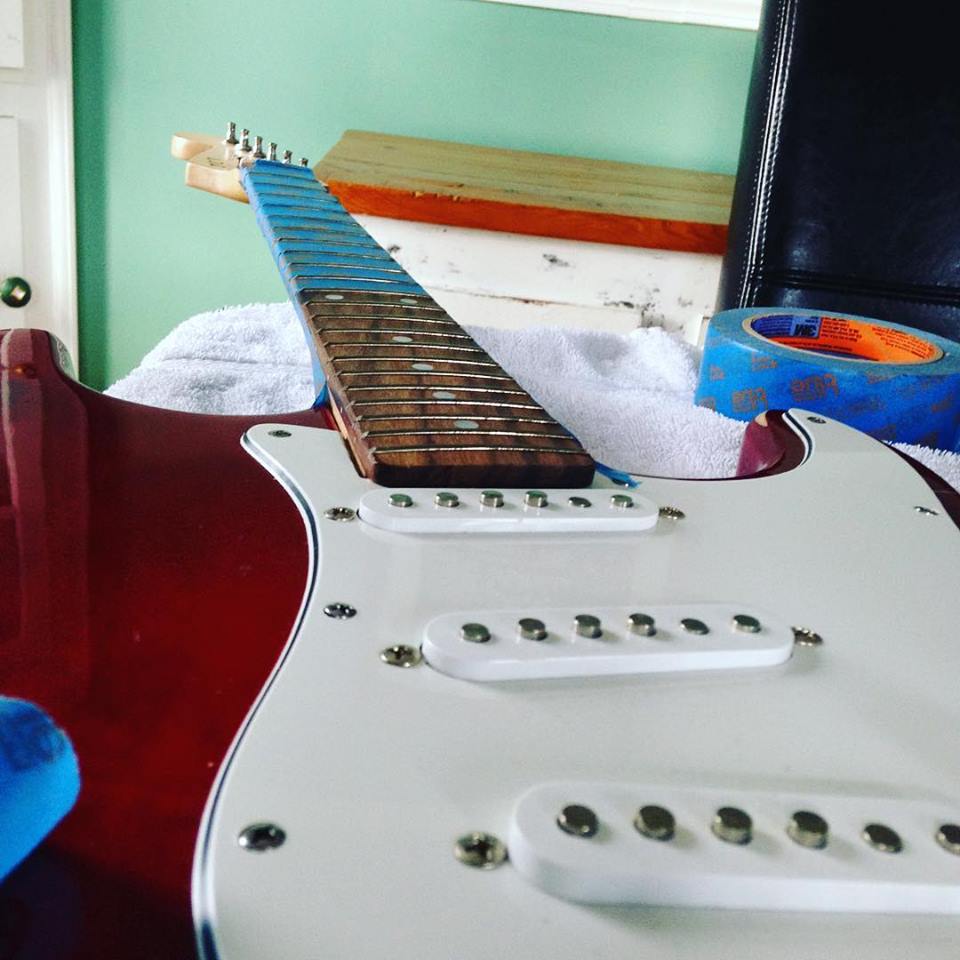

That experience, along with many others, has inspired me to be more ‘musical’.  And I’ve created some habits to make sure that happens…because for me, it creates happiness, and it brings me closer to that passionate way of living.  It’s actually really simple.  Why not try to do more of the things we like doing?


Having Matilda around has totally brought light to this.  The kid is always living in the moment, and as the innocence and naivety of childhood provides, simply doing the things she really wants to be doing.  It’s of course a balance for us parents to allow as much of that as possible, while also showing boundaries and limitations.  This seems to be a conversation I’m having everyday now.   And I absolutely love it!


I feel strongly though that in order to harness your passion…to secure it and hold it for future access…you must act immediately, or soon after your inspirational experience.  We have so many thoughts.  So many distractions.  You need to make sure to somehow follow through on your experience.  This could be as simple as going home and writing a journal entry about your thoughts and feelings, and tying that in to your goals.  It could be setting up another date with that person.  Maybe it’s buying your first guitar.  Starting to exercise more.  Or starting a business!  Whatever it is, use your passion as a catalyst.  It will help propel you to happiness and an inspirational life that is actually tailor fit for you!  It’s like being your own life coach.  


Do you ever say, ‘that would be fun’, or ‘I should do that’, but then find that you have reasons or excuses or distractions that get in the way?  Just the simple awareness of your thoughts surrounding this will prove to be very helpful.  And I’ve said this before…mindfulness and meditation are amazing tools…especially when it comes to self-awareness.  Once you are aware, you can start creating everyday habits that are directly linked to what you truly want.  I believe in using routines and habits to instill these values…especially if you’re an old dog learning new tricks.  I’ll share some of the routines that help me in another post.  


The next time you feel emotional, passionate, truly inspired…go be it!


What does inspire you…and how do you find it in your every day?  Don’t let it slip away!
how to pan for gold…in books though

‘I’m wondering what to read next,’ Matilda said.  ‘I’ve finished all the children’s books.’ – Roald Dahl

Music:  I found this artist, Jose Gonzalez, while watching the movie The Secret Life of Walter Mitty.  This song fit into the film so nicely.  It would be so cool to choose songs for a movie.  Who gets to do that?  Anyway, I highly recommend the movie and Jose’s music!  Click here to listen while you read. 

As I mentioned on my Reading List, there are some books that I just know…I don’t need the whole thing.  I just want the small bits of gold that apply to me.  I only use this technique for non-fiction works.  Obviously, I want the entire story within a novel and don’t recommend ‘panning’ a piece of fiction.  


In much of what I’ve found within non-fiction, an author does some great, focused research related to what they want to write.  They then present it in a way that works for them.  They also have to tell somewhat of a story with it…present it in a way that flows nicely for the reader…and usually attach some case studies (anecdotes about people applying the book’s theories).  Sometimes, I can tell that I love everything about the idea and everything related.  In that case, I take it all in.  

What is she thinking?  Where is she traveling?

On the other hand…and actually most of the time…I don’t want all the extra fluff.  I take the author’s unspoken word that their idea works for the case studies presented.  Just be careful with this, because they’re obviously not going to tell you stories when their information is arbitrary or ineffective.  That would be counter-intuitive.  I rely on myself though, to find the valuable nuggets of information, the ones that apply to me, and discern as to whether or not I agree or disagree with them.  This usually takes me 10-15 minutes, which means I can ‘pan’ one book a day!  Here’s what I do:


1.  The first thing I do is read the title and author.  Duh!


2.  Then, I go in the back sleeve and find ‘about the author’.  I like knowing the background information of the architect here.  They might have been fed from a silver spoon…might have 5 kids…or none…might have run some marathons…might enjoy their gun collection…or live off the grid.  What I also find here are websites related to their cause, or that they recommend.  


3.  Find the Table of Contents, look over it quickly to see what stands out to you, then dog ear the page.  You might be returning to this page a bunch.  


4.  Get a blank piece of paper, or notebook, or journal…and a writing utensil.  #2 Ticonderoga pencil is my go-to.  That was a joke.


5.  Here is where you start panning for gold!  First, check the end of chapter 1 for a ‘review’ or ‘summary’ or ‘wrap up’.  Some authors use this for each chapter, and it’s so helpful for us as gold panners.  If so, simply jump to each one of these, and write anything down you feel you need.  Here’s an example of a quick review from How to Talk to Anyone, by Leil Lowndes:


Since all of the gold had a grey background in this book, it was easy to spot. All the other writing was a longer hand version of this…and stories of when her friends tried this. Unnecessary! 


You may find a piece of information that you want more of in that summary.  If you do, just go back through the chapter quickly, looking for the terms that apply, and just take what you need.


If the chapters don’t have the summaries, you’ll have to work a little harder.  But all you have to do is rotate your pan in the water, sifting and scanning for information relative to you.  Most of the time there are bold letters, or headings that will help in your search.  


Always use the dog-eared Table of Contents to keep you guided throughout, and as a reference for what to find… and where.  


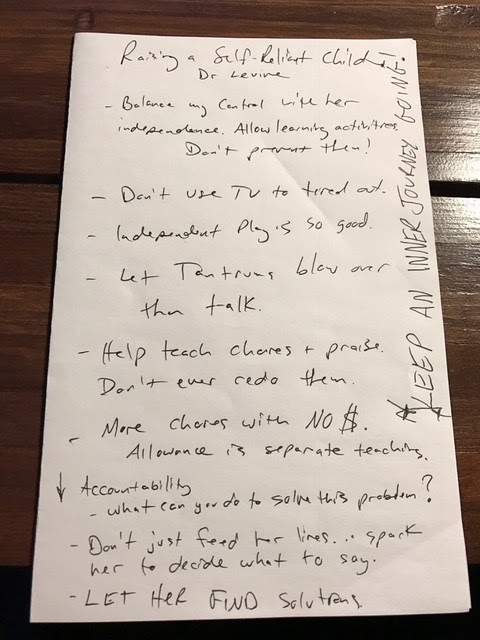
You may write down a lot.  You may just write down 2 bullets of information…2 nuggets of gold.  You may have a photographic memory and not have to write anything down.  It’s up to you.  Since my own memory is more bronze than gold, I do have to write something down.  I also enjoy having a folder in my drawer where I keep my ‘sheets of gold’.  I know that I can quickly go back and find what I wrote down…access the inspiring notes to keep me practicing a new habit…or find that author I liked to help me find that other book he or she wrote.  Here is an example of one of my sheets of gold (from the book Raising a Self-Reliant Child by Alanna Levine):


I simply write the title and author on top, and then some notes below.  My handwriting should tell you that I’m doing this fast.  Hopefully, I can read it when I go back to it!


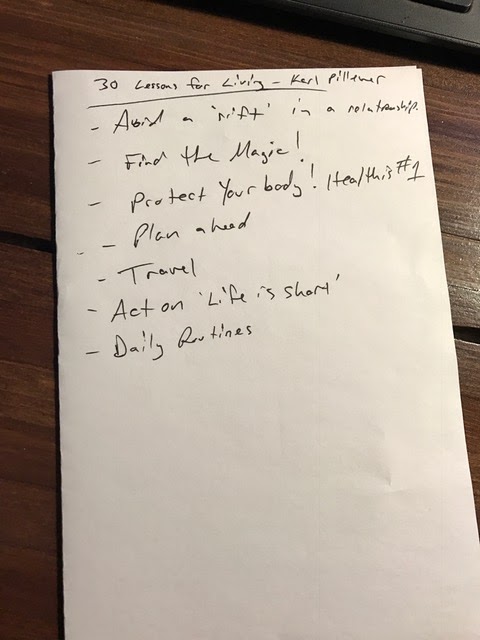
Here’s another one with less notes.  It’s from the book 30 Lessons for Living: Tried and True Advice from the Wisest Americans, by Karl Pillemer:


That’s it!  Again, this takes 10-15 minutes, and you can pan a book a day! You’ll be rich before you know it.  Think of all of the great research you can access…the great authors and innovative thinkers…the people who have failed and then found the most effective ways to succeed…the parents who know what works.  You can use all of their blueprints.  It’s very handy.  By the way…I’ve spent a lot of money on education up to this point.  I’m very happy I did, and I’ll probably continue to do more.  However, all of this gold panning I’ve been doing…all of the ‘acquisition of knowledge’…has been totally free, from my public library!   A guy I play basketball with told me, ‘that works just as good…all the greatest minds in history are right there on the shelf.’  Nicely put right?  Thanks Matt!

This is your pass to free gold!


One last note…often I email the author, thanking them, and letting them know that their information was helpful.  Sometimes their email address is in the ‘About the Author’ section.  If not, some quick Googling can usually find it.  I think they deserve the gratitude.  I also see it as networking, and connecting with these folks I have a lot of respect for.  You can consider them mentors in absentia…and think of them as part of your own Circle of Elephants that I mentioned in another blog post.


I’ve been surprised at the emails I get in return.  Most of the time it’s a secretary or publicist that writes me back, telling me they’ll forward my message on.  Sometimes though, the author writes back, happy to hear from a reader.  And now you have a specialist in your contact list!  Last week, I was happily exchanging emails with Jack Welch, the former CEO of General Electric.  Someday, I might want to ask him a business question…and it’s fun to know that he might actually respond!  I’m still waiting to hear from Warren Buffett.


Good luck in your journey finding and becoming gold!

Please follow me if you enjoyed this!

All love!

born and raised

‘When you love someone, the best thing you can offer is your presence’    – Thich Nhat Hanh

Music:  I would say Justin Vernon is somewhat of a musical genius.  His band, Bon Iver, is pretty special.  Click HERE to listen while you read!


What does it take to raise our children properly?  And when are they ‘raised’?  How can we measure what we’ve done…what they’ve done…and decide if they’ve grown up, succeeded…if we’ve succeeded as parents?

I think about this a lot.  And I’m always trying to gather answers from books (just finished ‘Duct Tape Parenting, and I loved ‘Parenting without Borders’…check my reading list HERE), and other parents, and family.  Parenting is unique and intriguing.  We’re all just trying to do what we think is best, and use what we believe to be, the most effective strategies in order to prepare our children for the future.  Do we employ methods our parents used that proved to help us, and that left us with happy memories?  Do we fall into inevitable patterns and behaviors that we swore to ourselves we’d never practice?

With the fact that I’m only 4 years into parenting, new experiences, and questions, and trial and error, have been frequently arising.  It’s forced me (or allowed me) to strengthen my opinions regarding methods, search deeper for more understanding, and laugh when I catch myself thinking I’ve figured it all out.  I have figured out a little actually, and have gathered some ideas I believe in:


Circle of Elephants

Our children do best with a strong support structure around them.  We as parents can fulfill the immediate needs of our kids.  But we can’t do it all.  This is the ‘it takes a village’ idea.  There are so many obstacles and challenges in our children’s future.  There are many hyenas trying to get at our baby elephants.  Our community is where we can find and select our other elephants that will create a circle around our calf.

Matilda with her Aunt McCall

We should look to our relatives, our friends, our schools, our neighbors, our church, our coaches and others that we trust to be part of our network.  I think this is such a healthy way to ‘use’ people.  And immediately that term brings up a host of negative connotations.  However, along with a love, companionship, trust, and reverence we have for these folks around us, we can also simply appreciate that they all offer wonderful and diverse perspectives, beneficial for raising our kids.  If this is a consideration of yours, you’ll be able to ‘use’ their help.  And especially as the children grow older, they’ll hopefully see some individuals in the circle as mentors, and will be able to access them on their own.


Math

There are 168 hours in a week.  How much time did you spend last week in the immediate presence of your child?  I mention ‘immediate presence’ because I feel strongly about our proximity, and accessibility, and availability to our children.  We can’t be home, but removed.  Nearby but inaccessible.  And we can’t just rely on our Circle of Elephants, before we’ve created a strong, healthy pack at home.

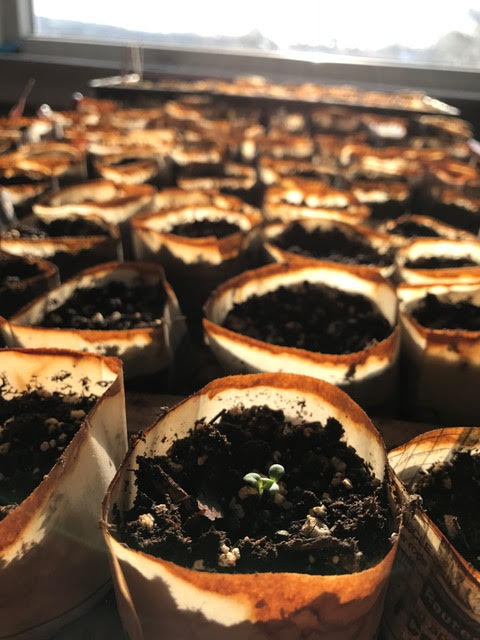
Matilda’s seedlings are fragile but resilient

My daughter, Matilda was born prematurely, and needed to stay at the hospital for a month or so.  Fortunately, the hospital she was delivered in (Catholic Medical Center), was practicing ‘couplet care’.  This is an evidence based best practice in maternity care, encouraging the mother and baby to be as close and together as much as possible during their stay.  I’m guessing the research and evidence with Dads is lacking…I don’t see much.  And from my perspective as a single Dad, I’m starting to notice more discrepancies and cultural norms and interesting gender roles like that still present in today’s world.  With that said, I still attempted to be as close to Matilda as possible, for as much time as possible…even so close as practicing ‘skin-to-skin’ contact when able, in order to strengthen our bond and concentrate on that connection.

Maybe we could consider Malcolm Gladwell’s 10,000 hour rule, in which he proposes that we need to practice something for 10,000 hours in order to achieve mastery.  Maybe if we are around our children for that many hours…they will be ‘raised’!  You see, I try to think of standard time with our children as addition.  Just add up the hours.  However, I believe in somewhat of a multiplier option.  The closer you are to your children…the more multiplication is happening.  Some might see this as ‘attachment parenting’.  And by the way, the definitions for that mostly speak of a closeness for mother and child…doesn’t mention as much on Dads…there’s something wrong with that!

Anyhow, during the earlier stages of the child’s life, it’s even more exponential.  I think we can make a single hour become 1.1 or 1.2 hours with this practice.  Another way to multiply is to think of the intensity of the experience

together.  This can be emotionally or physically.  Think about if you went rock climbing with your child for an hour…and compare that to playing Angry Birds with them for an hour.  This significance of the experience is multiplied on out.  Be careful though, a once-a-month movie date does not compete with 30 days of dinner at the table together.  It doesn’t add up.

If we are around our kids for an hour before school, and lets say three hours after…is that enough?  4 hours in a given day?  Let’s also say we spend more time with them on the weekend…maybe 10 hours per day.  So 20 hours on a weekend, and 20 total during the week.  That’s 40 hours out of the 168 available.  This is obviously a very general estimate…maybe way low or way high for you.  But I would guess it’s close to average.   Is it enough?  Is that enough time for us to reach our goals as parents?  Is it enough to raise our kids properly?

This, for me, brings in the question of schools or daycare.  If a child is on the bus, at school/daycare, attending an after school activity for 8 hours a day/ 40 hours a week…that’s the same amount of time that we are spending on them…investing in them ourselves.  It must be stated that we are placing a huge responsibility…an immense pressure…on those institutions we send our children to.  At the same time, we as parents are holding a tremendous amount of trust and faith in these people and places.

Matilda made this at her pre-school.

I’ve been to school.  I’ve found amazing teachers and mentors.  I’ve had some bad ones.  Some helped me overcome obstacles, and challenged me, and helped me grow.  Some seemed out to lunch, cold, unavailable.  I’ve also taught high school English, and held other positions at schools.  I wonder if I was ever ‘out to lunch’.  Oh no!  There were definitely moments when I was!  Sorry kids.  And parents.  I only say this because I’m not sure we think enough about how our kids time is spent, if our teachers are amazing…incentivized and rewarded to be such, if the administration allows that.  “It’s a good school district,” is what I hear from many parents…but I often wonder where that came from and if they truly know what’s happening for the 40 hours a week…if their situation is truly the best use of that time.  It’s such a hard question.  And what are our options?  Moving, private schooling, homeschooling, unschooling?  Maybe it’s as simple as having that conversation with the teacher that you’ve been meaning to have.  I think these are all worth exploring.

What are your best tips for parenting?  What are the books or films that have helped you the most? Do you have a circle of elephants? Please comment, share, post, and follow if you like!

All love!


sandwiches and kids

Jimmy 12


modeling good behavior has 10x the influence of all that talking, the kids are watching’   emailsig


How do we make good behaviors stick with our children?  I’ve been ‘head down’ focused on this a lot lately.  I have a 4 year old.  There are constantly new behaviors bubbling up…good and bad.  I’m doing my best to be really aware…noticing what’s working, and what’s not on the parenting front.


Model.  First and foremost, I’ll say that I continue to be amazed at how much my daughter notices my behavior…and how important it is for me to model the good stuff.  All the research backs this up as well.  Your child is watching what you do more than listening to what you say.

To me, it seems that modeling good behavior has 10x the influence of all that talking.

Don’t get me wrong, I’m communicating and explaining and clarifying all the time.  It’s just that the old adage, ‘actions speak louder than words’ is the truth.  We can’t tell our child to walk away from a fight if they watch us bump chests and instigate.

Honey over Vinegar. When we do talk, it’s so important to focus on our children’s strengths…not their weaknesses.  All too often, parents are hounding on the mistakes, over-talking the accidents, and holding their child back from their full potential.  For the most part, once an individual knows that a mistake was made, and the message to ‘try not to do that again’ is conveyed…all the extra, negative reinforcement is just that.  Obviously, each situation is unique, and the severity of the behavior needs to be considered.  For the everyday ‘small stuff’ though, keep the glass half full.

Focusing on the good behaviors, has such a refreshing and compounding effect.  By taking the extra time to really look your child in the eyeballs, and tell them again how kind and caring that desired behavior was,  you’ll continue to invite more of it.

Last week, my daughter exhibited some really good awareness and empathy surrounding a best friend that was having some trouble.  She actually asked a separate friend to run and get something that would help the situation…then, they all figured it out together.  I was so happy and proud about this, and almost couldn’t believe that my 4 year old constructed this.  But instead of just thinking about this, or telling my peers, I’ve deliberately paused with Matilda, grabbed her attention, looked her in the eye, and explained how and why that was such a great thing for her to do.  I’ve actually done it twice to really let her know that this is the good stuff.

Sandwiching.  While focusing on the strengths and good behaviors, we can really make it stick by ‘sandwiching’ the experience with pre-teaching and reflection.  Before our child is exposed to something, it’s good to get a bug in their ear first.  This can give that little message that, ‘oh…dad told me that this might happen.’  It doesn’t necessarily mean that our child won’t make a mistake.  In fact, we actually want them to make the mistake…it will help expedite the learning process and mitigate the effect of the ego. Yes!  I used ‘expedite’ and ‘mitigate’ in the same sentence!  So rewarding.

Our pre-teaching is also a trust-building practice, illustrating to our children that we do know a little something, and have been around the block a few times.

Now, this behavior that took place with my daughter wasn’t something that I necessarily could have planned for.  I mean, I do talk about empathy and kindness with her, but the actual details of the event were too particular to pre-teach.  I have to give myself some credit though, in that I have put effort into conversations surrounding helping others, and why that matters.

I think parents are too hard on themselves.  I think they need to realize that they are much more than the sum of their parts.

With a more typical experience approaching in the future, parents can really hone in on the related behaviors.

If a best friend is coming over for a play date, we can relay the message to our child that the friend will want to use all of the toys.  Sharing is going to come up.  Let’s do that…huh?

Then, as we all know, our child will rip something from their besties’ innocent little paws.  Crying and arguing may commence…and we should really do our best to let this play out…to see what kind of results are reached…to allow problems to be solved.  This is the socialization that we’re hoping for.  And boy, will these same issues come up more and more as they age.  Let them work it out if possible!  It’s ok if feelings get hurt…we learn a lot when we find ourselves in unwanted emotional states.  Again, this is within reason.

Remember though, we have to use the ‘reflection’ piece after the experience takes place.  This can’t be while your kid is on the tablet, or watching a show  It can’t be during the actual argument that they just had with their friend either.  This is best done after some time has passed, once the friend has gone home…or during a break in the action.

Eye contact is key.  Deliberate, honest words presented with love and care.  Not judgment and belittlement.  Think support and education and growth…not placement and insults and punishment.

There can be an ‘I told you so’ aspect to this reflection piece, because you actually did tell them so in the pre-teaching phase…ugh, the nerve!  As much as you may want to use this…don’t.  The lesson will naturally come to them through your discussion of what transpired.  This reflection can build trust as well, depending on how you handle it.  Let it be positive, bucket filling, and hold good karma.  It’s not measurable, and it may return in unforeseen manifestations…but boy, does it matter.

Remember, after all this talking to your kid about the practice of letting others use their stuff, your child will be 10x more influenced by how you yourself actually share and help others.

How are you doing with that?

All love!

Jimmy Thorpe

emailsig